The Best Book Apps in 2026 — Ranked for Every Kind of Reader
If you've searched "best book app" recently, you've probably landed on a list written in 2019 that still recommends apps that haven't been updated since Obama was in office. This isn't that list.
I built a book app — so yes, I have skin in the game, and I'll tell you upfront where Hylle appears on this list. But I've been using most of these apps myself for years, and I'll be honest about what each one actually does well. The best app for you depends entirely on what problem you're actually trying to solve.
Here's what I think matters in 2026.
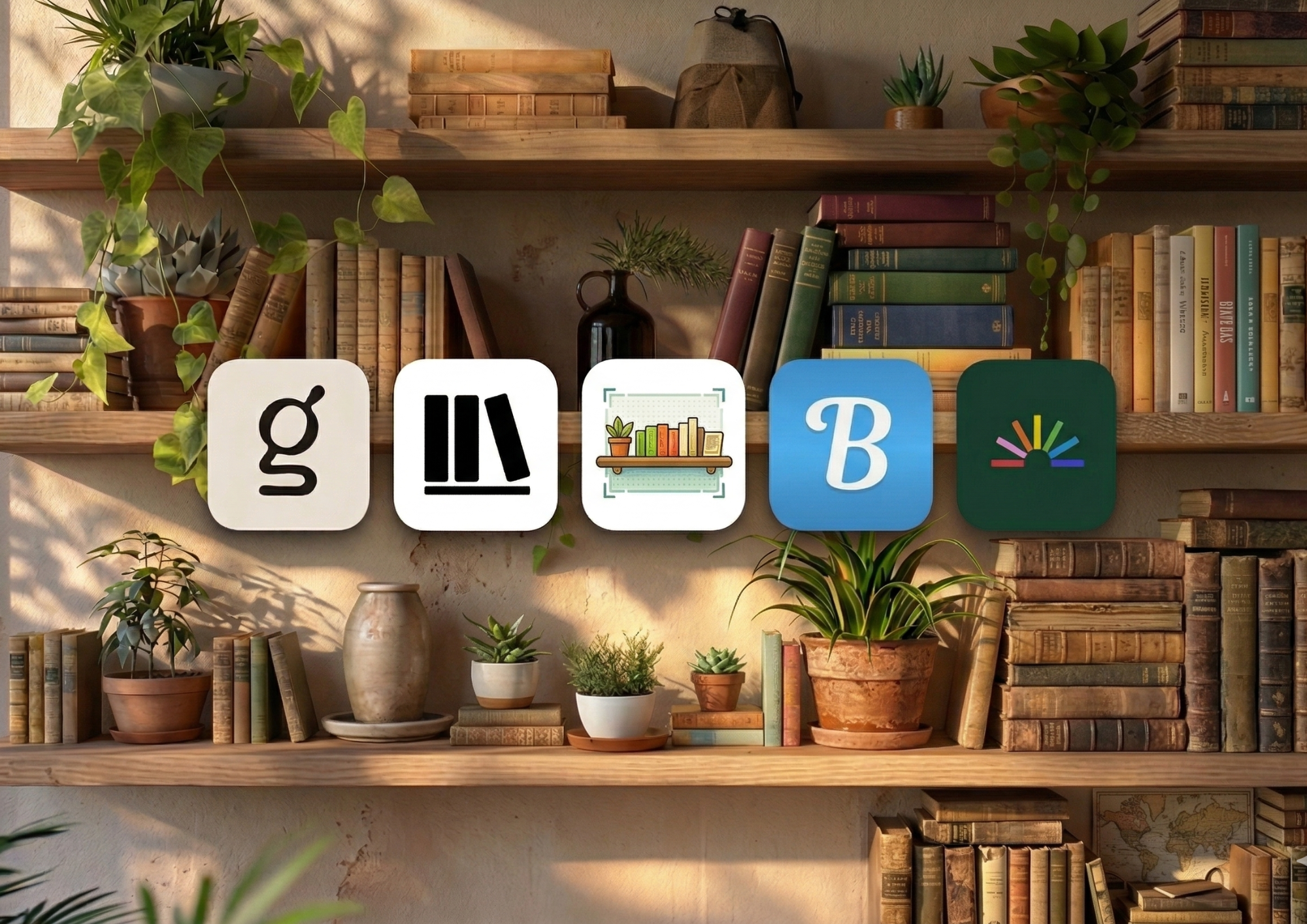
The shortlist
| App | Best for | Platform |
|---|---|---|
| Hylle | Scanning a physical shelf and bringing it to life | iOS, Android |
| StoryGraph | Tracking what you read, mood-based recs | iOS, Android, Web |
| Goodreads | Social reading, finding what friends read | iOS, Android, Web |
| Fable | Book clubs and social reading with friends | iOS, Android |
| Bookly | Reading timer and habit tracking | iOS, Android |
1. Hylle — Best for readers who own physical bookshelves
What it does: You point your phone camera at a bookshelf. Within about 30 seconds, every book is identified, listed, and added to your library. No typing, no scanning barcodes one by one. Just hold up your phone.
This is the thing that makes Hylle genuinely different from every other app on this list: none of them do this. Every other app assumes you already know what books you own and are willing to type them in. Hylle starts with your physical shelf and brings it to life.
Beyond the scan, Hylle includes personalised recommendations, a friend lending tracker (who borrowed what, and when), book clubs, a reading calendar, a wishlist, and a reader persona that updates as you add books.
Who it's for: Anyone with books on an actual shelf who has never catalogued their library. If you have 40-300 books and no idea what's actually on your shelves, Hylle solves that problem in under a minute.
Honest take: Hylle is young, and the scan works best in good light — it flags the spines it isn't sure about so you can fix them. It's not a reading habit tracker. If you want to log every reading session, look at Bookly. If you want to escape Goodreads, look at StoryGraph. Hylle's magic moment is the scan. Everything else builds from there.
Pricing: Free to start, including your first shelf scan. Hylle Pass at €5.99/month or €59.99/year adds scans, recommendations and the reading features every month.
Platform: iOS and Android. Available on the App Store and Google Play — more at hylle.app.
2. StoryGraph — Best Goodreads alternative for serious tracking
What it does: StoryGraph is a reading tracker built as a Goodreads alternative: mood and pace tags, reading stats, and suggestions based on how you say you like to read — not only genre. It's independent, women-owned, and still actively developed.
Who it's for: Readers who want a structured log and don't mind spending time in menus and filters. If you like seeing pages per day, streaks, and genre breakdowns, it's built for that kind of reader.
Honest take: I use StoryGraph sometimes; it's useful, not flawless. The mood/pace angle is a nice change from pure star ratings, but recommendations are only as good as the tags you maintain — it can feel fiddly. Social features are much lighter than Goodreads, which is either a relief or a dealbreaker. If you're leaving Goodreads over Amazon, StoryGraph is a credible option worth trying — alongside a few others — not a wholesale upgrade for every person.
Pricing: Free. StoryGraph Plus adds extra stats and features for an annual fee.
Platform: iOS, Android, Web.
3. Goodreads — Still the default for social reading
What it does: Goodreads is where your friends are. It has the largest social graph of any book app — hundreds of millions of users, reviews on virtually every book ever published, and the broadest integration with publishers and authors.
Who it's for: Anyone who wants to see what their friends are reading, discover books through trusted reviews, or participate in reading challenges with a large community.
Honest take: Goodreads is owned by Amazon, hasn't had a meaningful design update in years, and the reading timeline is more social noise than signal. But the review database is unmatched. The community reading challenges in January are genuinely motivating. And if someone recommends a book to you, the first thing you'll do is look it up on Goodreads. It's not going away.
Pricing: Free.
Platform: iOS, Android, Web.
4. Fable — Best for book clubs and reading with friends
What it does: Fable is built around the social side of reading. You can create or join book clubs, read and annotate ebooks directly inside the app, share highlights, and have threaded discussions chapter by chapter. It's less of a tracker and more of a reading room — somewhere to read and talk about books with other people.
Who it's for: Anyone who's ever tried to run a book club over WhatsApp and found it chaotic. Fable puts the book, the discussion, and the group in one place. It also has a curated discovery layer with clubs run by authors and public figures, which gives it a community angle that neither Goodreads nor StoryGraph quite matches.
Honest take: Fable's in-app reading experience is genuinely well done, and the chapter-by-chapter discussion format changes how a book club functions — you can't accidentally spoil someone if the conversation is gated by progress. The discovery side is hit or miss depending on what you read. If you want a book club app, this is the best one available. If you want a reading tracker, it's not the right tool.
Pricing: Free. Fable Premium unlocks expanded features.
Platform: iOS, Android.
5. Bookly — Best for reading habit tracking
What it does: Bookly is a reading timer. You open a book, start the timer, and Bookly tracks your sessions, calculates your reading speed, and shows you when you'll finish a book based on your pace. It's for people who treat reading as a habit to build and measure.
Who it's for: Readers who want accountability around actually finishing books. The timer approach sounds clinical but works surprisingly well as a daily ritual.
Honest take: Bookly won't help you discover books or connect with other readers. It's a productivity tool dressed in a book costume. If you've been "reading" the same book for four months, this might be what you need. If you read obsessively already, it'll feel like overkill.
Pricing: Free. Bookly Pro unlocks full stats and features.
Platform: iOS, Android.
What's missing in 2026
There's still no great app for the specific moment of standing in a bookshop deciding whether to buy something. Goodreads comes closest, but the experience is slow. There's also no good app for tracking books you want to read based on what other people in your actual social circle are reading — not algorithmic recommendations, but "my friend Ana has been recommending this for two years, let me finally track it."
These are real problems. I have opinions about where they go next, and I'll be writing about them.
The honest answer
- If you own a physical bookshelf and want to catalogue your books: Hylle.
- If you want to track every book you read with detailed stats: StoryGraph.
- If you want to know what your friends are reading: Goodreads.
- If you run a book club or want to read with friends: Fable.
- If you want reading accountability: Bookly.
Most people will end up using two of these. That's fine. Books deserve more than one app.
Happy reading!